The Scale Paradox: Why Most Industrial Vision Projects Collapse Beyond the Pilot
News & Insights
5 Min Read
Nearly 70 percent of machine vision projects fail to move beyond the pilot phase because they are designed for laboratory perfection rather than factory reality. This article explores the Scale Paradox and explains how NorrSpect overcomes it by building robust systems that handle environmental shifts like vibration and lighting changes. By utilizing the modular architecture of NorrStudio, OEMs can move away from customization chaos and adopt a copy-paste scaling model that ensures a predictable return on investment across the entire enterprise.

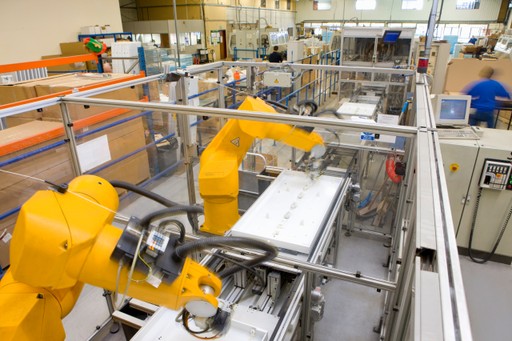
In the current push for Industry 4.0, a startling reality has emerged: nearly 70% of machine vision projects fail to transition from a successful pilot to a full-scale production deployment. For Global OEMs, this failure is not merely a technical setback; it is a financial drain that costs millions in stranded capital, missed efficiency targets, and ongoing manual labor. The "Scale Paradox" exists because many vision systems are designed for laboratory perfection rather than industrial realism. While a standalone AI model might perform flawlessly on a curated dataset, it often disintegrates when faced with the chaotic, variable, and high-velocity environment of a live assembly line.
The primary reason these systems fail to scale is a lack of Industrial Realism in the initial architecture. Many vendors sell "black box" AI models that are hypersensitive to environmental shifts. A slight change in ambient factory lighting, a new batch of raw materials with a different surface finish, or the inevitable mechanical vibration of a nearby press can cause a fragile system to trigger a flood of false positives.
For an OEM, these false rejects are as costly as missed defects, leading to massive backlogs and an erosion of trust in the technology. NorrSpect avoids this by building systems that own the full stack from the sensor to the decision ensuring that the logic is robust enough to handle the "dirty" reality of the factory floor. Another critical failure point is the lack of Modular Scalability. Rigid, proprietary systems often require a total rebuild when an OEM introduces a new product variant or adds a second production line.
This lack of flexibility leads to "customization chaos," where every new station becomes a six-month engineering project. NorrSpect’s platform, NorrStudio, is designed to break this cycle. By using a hardware-agnostic orchestration layer, OEMs can deploy standardized AI modules that work across different cameras and sensors. This allows for a "copy-paste" scaling model that reduces integration time from months to weeks, ensuring that the ROI of the first line is replicated across the entire enterprise.
Ultimately, scaling vision systems is a challenge of Digital Traceability and Ownership. When a vision system fails at scale, it is often because there is no clear audit trail to explain "why" a specific decision was made. This lack of explainability prevents engineers from performing root-cause analysis, forcing them to revert to manual inspection. NorrSpect solves this by providing time-stamped, image-based audit trails for every part, turning quality data into an actionable engineering asset. By bridging physical systems with this level of digital intelligence, we help OEMs move past the pilot phase and into a future of predictable, high-speed, and zero-defect manufacturing.
Contact our sales team to secure your global production roadmap: enquiries@norrspect.com
Join our newsletter list
Sign up to get the most recent blog articles in your email every week.
Similar Topic