AI-Powered Hole and Tear Detection for Textile and Apparel Manufacturing
How NorrStudio by NorrSpect enables real-time, automated detection of holes, micro-tears, and fabric breaks on production lines eliminating costly downstream defects before they reach garment assembly.
96%
Reduction in hole-related batch rejections
<200ms
Detection latency per defect event
99.1%
First-pass detection accuracy on woven fabrics
Overview
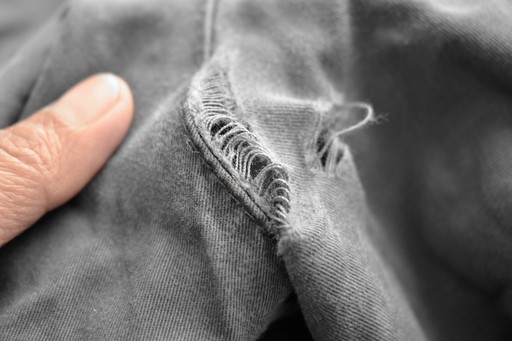
Holes and tears are among the most damaging defects in textile manufacturing. A single missed tear in a fabric roll can propagate through cutting, stitching, and final assembly resulting in scrapped garments, rework costs, and brand damage. Traditional inspection methods, whether manual or camera-based without AI, routinely fail to catch micro-tears smaller than 2mm or holes hidden in patterned or textured weaves.
NorrStudio, developed by Swedish industrial AI company NorrSpect, applies deep learning vision models trained specifically on textile defect types including structural breaks, pin holes, warp tears, and weave separations to detect these faults at full production line speed, inline and without human intervention.
About NorrSpect
NorrSpect is a Swedish AI company headquartered in Umeå, Sweden, specialising in industrial visual inspection. With a proven track record in high-precision sectors including automotive, where its systems are trusted by manufacturers such as Volvo Cars NorrSpect brings the same inspection-grade AI to textile and apparel manufacturing through its NorrStudio platform. NorrStudio is configurable to fabric type, production speed, and defect priority, making it deployable across weaving, knitting, dyeing, and finishing environments.
Industry challenge: why holes and tears go undetected
Manual inspection of fabric rolls is inherently limited by human fatigue, lighting conditions, and throughput pressure. Inspectors examining rolls at 30–80 metres per minute cannot reliably detect defects smaller than 5mm, and even automated legacy systems miss holes disguised by pattern overlaps or fabric texture. The result: structural defects enter production undetected, driving up cut-waste, downstream rework, and reject rates at final quality assurance.
The most common hole and tear defect types in textile manufacturing include:
Pin holes
Sub-millimetre punctures from needle damage or handling hooks, invisible under standard lighting
Warp tears
Longitudinal separations along warp threads caused by loom tension spikes or yarn breaks
Weft breaks
Cross-directional gaps appearing as thin horizontal lines, often misread as shadow under inspection lamps
Edge fraying tears
Structural fabric breaks beginning at selvage edges and propagating inward during rolling
Needle-cut holes
Mechanical cuts from stitching needles during upstream joining operations on composite rolls
Tension pull tears
Fabric stress separations forming at high-speed stenter or tentering frames under uneven tension
Solution: NorrStudio AI defect detection for holes and tears
NorrStudio deploys high-resolution line-scan cameras positioned across the full fabric width, paired with controlled multi-angle lighting rigs that surface structural defects through differential illumination. Deep learning models, trained on thousands of textile-specific defect samples, analyse each frame in real time flagging defect location, size, and severity without stopping the line.
Detects holes as small as 0.5mm across fabric widths up to 3.2 metres at full production speed
Distinguishes true structural holes from pattern elements, weave gaps, or open-construction meshes using contextual AI modelling
Identifies warp and weft tears via directional texture analysis and structural discontinuity mapping
Operates inline on greige, dyed, printed, and finished fabrics across knit, woven, and non-woven substrates
Generates annotated defect images with GPS-style roll coordinates for precise downstream cutting avoidance
Integrates with ERP and cutting room software to automatically flag defective zones and adjust cut markers
Provides machine health signals recurring tear patterns often indicate loom tension faults or needle wear before mechanical failure
Solution
NorrStudio AI Inspection Hole & Tear Module
Inspection scope
Greige fabric rolls, dyed cloth, finished textiles, knit and woven substrates
Hardware
Line-scan cameras, multi-angle structured lighting, motion-sync encoder
Output
Real-time alerts, annotated defect images, roll-level quality scores, PDF reports
Integration
ERP / WMS linkage, cutting room software, supplier feedback loops
Deployment time
Pilot phase defined during onboarding; production-validated models per fabric type
Use case: integrated knit fabric manufacturer structural defect elimination
The problem: A vertically integrated knitwear manufacturer producing jersey and interlock fabrics for a major European sportswear brand was experiencing a 7–9% defect escape rate at final inspection the majority attributable to small holes formed during circular knitting and undetected until garment sewing. Each escaped defect resulted in a full garment rework cycle averaging 14 minutes per unit.
The NorrStudio solution: NorrStudio was installed at the roll exit of the knitting department and at the fabric spreader entry in the cutting room. Models were trained on the client's specific jersey and interlock constructions to distinguish true holes from the open loops inherent to the knit structure. Defect coordinates were fed directly to the CAD cutting system to avoid defective zones in marker planning.
Results:
Metric | Before NorrStudio | After NorrStudio |
|---|---|---|
Hole-related defect escape rate | 7–9% | <0.4% |
Garment rework per 1,000 units | 70–90 units | <5 units |
Manual inspection time per roll | 8–12 min | <90 sec (automated) |
Cutting yield loss from defect avoidance | Not tracked | Reduced by 3.2% via smart marker adjustment |
Mechanical fault early warnings | None | Loom faults flagged 48–72 hrs before failure |
Traceable QA documentation | None | 100% roll-level image archive |
Can NorrStudio detect holes in patterned or printed fabrics without false positives?
Yes. NorrStudio's models are trained specifically on each client's fabric type and construction. For patterned fabrics, the system learns to distinguish intentional design elements from structural defects using contextual texture and geometry analysis, achieving low false-positive rates even on complex prints.
What is the minimum hole size NorrStudio can detect?
NorrStudio can detect holes as small as 0.5mm under optimal lighting conditions. The practical detection threshold is defined and validated during the pilot phase using the client's actual production fabrics and line speeds.
Does the system require stopping the production line to flag defects?
No. NorrStudio operates fully inline at production speed. Defect alerts are issued in real time and the defect's roll coordinates are logged, enabling downstream avoidance without line interruption.
How does NorrStudio integrate with existing cutting room or ERP systems?
NorrStudio outputs defect data in standard formats compatible with leading ERP, WMS, and CAD cutting room systems. Integration scope and API configuration are defined during the onboarding and pilot phase.
What fabric types does NorrStudio support for hole and tear detection?
NorrStudio supports woven, knit, non-woven, and technical textile substrates including jersey, interlock, denim, twill, dobby, and synthetic performance fabrics. Each deployment is validated on the client's specific material.
Similar Topic